It’s 5:45 in the morning. The salty breeze brushes my face as our small wooden boat slices through the calm waters of Saleh Bay. The engine hums gently behind me, but all I can focus on is the quiet anticipation. We’re not promised anything today—no guaranteed sightings, no gimmicks. But that’s the whole point. That’s what makes this special.
This isn’t a theme park, and these aren’t trained animals. What we’re looking for is something far more profound: a moment of truth with the ocean’s gentle giant, in its natural rhythm, on its own terms.
Saleh Bay: A Hidden Jewel in Sumbawa
While Bali and Komodo often steal the spotlight, there’s something different about Sumbawa. It’s quieter, rawer, more untouched. Saleh Bay, in particular, feels like a secret you only share with those who truly understand the magic of nature-based travel.
Here, whale sharks come not because they’re lured by feeding or artificial triggers, but because this bay, rich with plankton and nutrients, is a natural buffet. It’s one of the few remaining places where you can witness these magnificent creatures without the choreography of tourism. It’s wild. And it’s beautiful.
Why This Experience Feels So Different
I’ve been lucky enough to snorkel with whale sharks before—in places like Oslob, where tourists line up and the sharks are fed daily to ensure a show. But something about that always sat wrong with me. Yes, I got my selfie. But did I really meet the animal? Or just the idea of it?
This whale shark trip Sumbawa experience is the complete opposite. There’s no human interference. No bait. No manipulation. Just you, the ocean, and the chance that—if nature allows—you’ll share the same space with a creature that’s been cruising these waters for millions of years.
It’s humbling.
The Timing Game: Patience Is Part of the Reward
Our guide, a local fisherman turned eco-tourism advocate, said it best: “You’re not chasing the whale shark. You’re waiting to be chosen.”
And that’s exactly how it felt. You scan the surface. You listen to radio calls between spotters. You learn to read the swirls in the water, the way the birds hover. Every sighting is earned, not handed to you.
Some mornings, it takes minutes. Other days, hours. And yes, on rare occasions, it doesn’t happen at all. But that’s what makes it real.
The First Glimpse
Just when I had settled into the rhythm of the waves and accepted that today might just be about the ride, our captain pointed ahead—his voice low but sharp.
“There.”
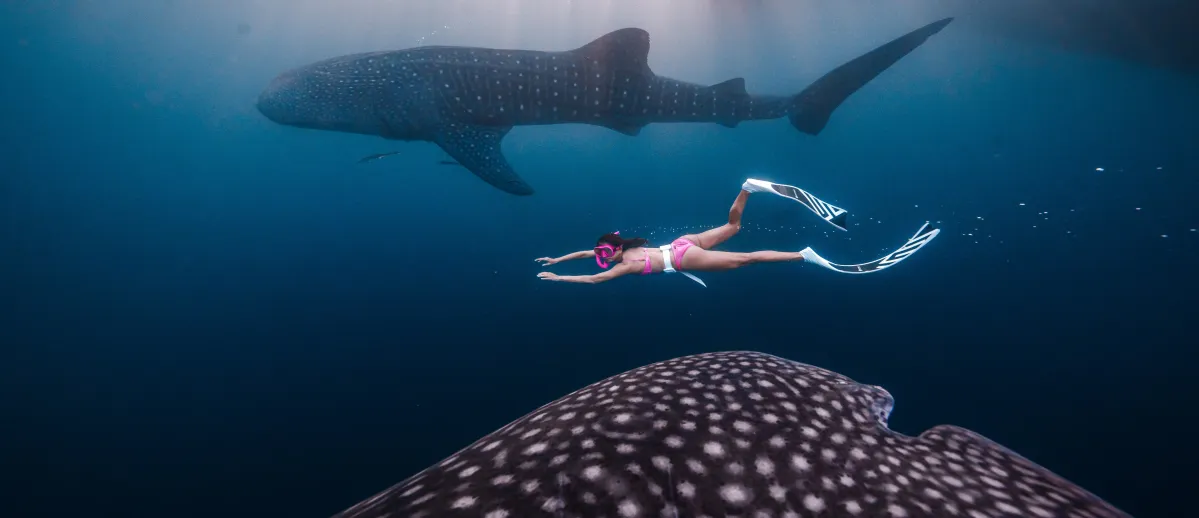
A shadow beneath the surface, slow and steady, gliding with grace no machine could imitate. I slipped into the water, heart racing but movements calm, guided by our trained spotters.
And there it was.
A whale shark. Easily over six meters. Spotted like a galaxy. Eyes soft and curious. Swimming just meters below, indifferent to my presence but not disturbed by it either.
We shared about two minutes together. Not long. Not staged. But it was enough.
Respecting the Wild: A New Standard of Eco-Tourism
Experiences like this one are helping reshape the way we think about marine tourism. It’s no longer about just ticking off the “big five of the sea” or going viral on social media. It’s about reconnection—between human and habitat, guest and host.
What the team behind the Saleh Bay whale shark tour has done is create a model that values the animal first. They collaborate with local communities, avoid artificial feeding, and limit group sizes to minimize stress on the animals.
This isn’t just a tour—it’s a lesson in coexistence.
Beyond the Shark: Stories from the Bay
Saleh Bay is more than just a whale shark hotspot. It’s a living ecosystem teeming with stories. From the traditional Bajo sea nomads who’ve navigated these waters for generations, to the coral reefs pulsing with life just below the surface, to the volcanic silhouettes lining the horizon—every corner of this bay tells a tale.
After our encounter, we stopped by a floating fish farm for fresh coconut and coffee. The conversation turned to tides, moon phases, and whale shark behavior. It was clear: here, nature isn’t just observed—it’s lived.
A Trip That Changes You
What started as a simple search for the world’s largest fish turned into something else entirely. A reminder of humility. A reawakening of patience. And an understanding that not every travel moment has to be curated or controlled.
Sometimes, the best experiences come when you stop chasing and start observing.
That’s the beauty of nature on its own terms.